

From Production to the Environment: Establishing an ISO 14001 System at HIRSCH Koviflex
2. October 2026

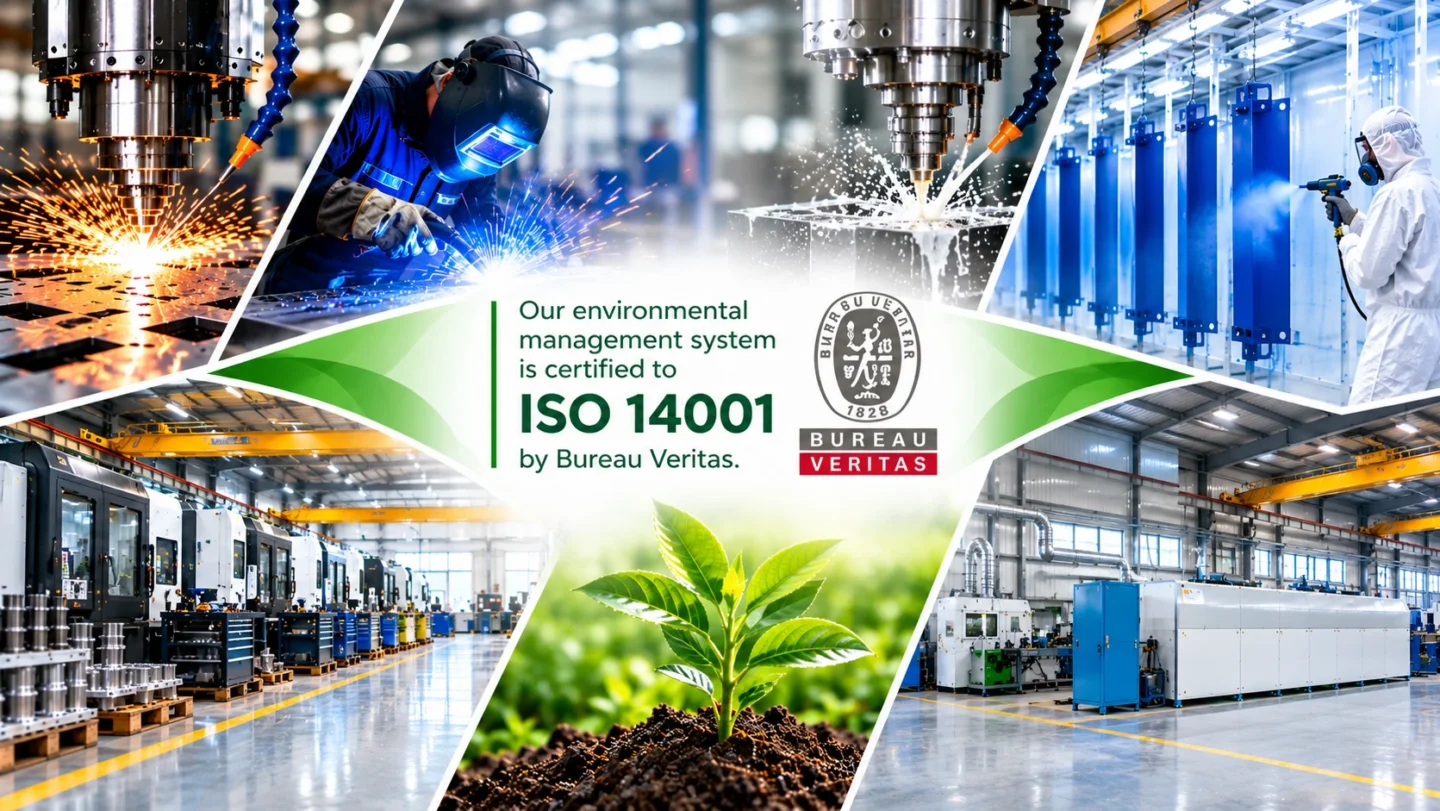
Establishing an environmental management system in accordance with ISO 14001 represents an important organizational and professional project for a manufacturing company, particularly when all stages of production are carried out within the company – from cutting, machining and welding to final assembly and painting of products.
This is not simply a matter of preparing documentation. It involves the systematic identification of the environmental impacts of activities, the integration of legal and other requirements, the assessment of the significance of environmental aspects, and the establishment of appropriate measures to control them.
At HIRSCH Koviflex, one of the main challenges we faced when establishing our environmental management system was how to translate the requirements of the standard into actual production processes. Particular attention was paid to our production technologies, the handling of hazardous substances and waste, the use of natural resources, emissions into the environment from different production facilities, and the environmental impacts associated with suppliers and external contractors.
1. From Documentation to the Actual Control of Environmental Aspects
One of the key steps in establishing the ISO 14001 system was the preparation of an environmental aspects register. We identified the areas of our activities in which environmental impacts could occur and assessed their significance.
The assessment took into account several criteria, including:
- legal and other requirements,
- costs,
- environmental impact,
- the views of interested parties and the public,
- the life-cycle perspective.
2. HIRSCH Koviflex CNC Machine Park: Connecting Advanced Manufacturing with Environmental Protection
An important realization was that an individual production activity generally does not have only one environmental aspect. A single production process can simultaneously affect energy and material consumption, waste generation, air emissions, noise and the use of hazardous substances.
CNC production represented one of the major challenges in establishing the system, as individual impacts had to be considered separately and linked to the actual production processes.
For CNC machines, we identified several significant environmental aspects, including:
- electricity consumption,
- the use of metal materials,
- the generation of metal waste and chips,
- the use of emulsions and other process fluids,
- the use of oils,
- the generation of waste contaminated with oils and other substances,
- emissions and aerosols associated with machining processes,
- noise generated by production equipment,
- the possibility of emergencies and spills.
We found that effective environmental management requires a thorough understanding of the technological process itself and the activities associated with it. A general description such as “CNC machining” is not sufficient. It is necessary to understand which materials, machines and substances are used, what is generated during the process, and how the resulting waste and emissions are controlled.
Only such an approach ensures that environmental aspects are connected to the actual working environment rather than remaining merely formal entries in the documentation.
3. Paint Shop: Environmental Challenges and Their Control
The paint shop also presented a particular challenge, as several different environmental aspects occur simultaneously.
The process was assessed primarily in terms of the use of paints, coatings and other chemical preparations, air emissions, the handling of paint and coating residues, the generation of hazardous waste, and requirements related to the storage and handling of hazardous substances.
An important part of the system was also ensuring appropriate procedures in the event of a spill or other emergency situation. The environmental aspect was therefore assessed not only from the perspective of normal operation of the paint shop, but also from the perspective of potential emergency situations.
This approach is important for effective preventive action within the ISO 14001 system, as the objective is not only to respond to environmental damage after it has occurred, but primarily to prevent such damage from occurring.
4. Safe and Organized Management of Waste and Hazardous Substances
Systematic waste management was another important element in establishing the system. Particular attention was paid to hazardous waste, such as waste oils, oil-contaminated materials, contaminated filters and cleaning materials, waste paints and coatings, as well as other packaging contaminated with hazardous substances.
We established procedures for the segregation, labeling, temporary storage and handover of waste to authorized waste management operators.
The traceability of generated waste is also important, as is understanding which production process each type of waste originates from.
The same principles apply to the storage and use of chemical substances and technical gases. For gas cylinders, oils, paints, cleaning agents and other substances, we established appropriate labeling and storage conditions, ensured the availability of safety information, and introduced controls for potential environmental risks.
5. Legal Requirements as an Integral Part of Our System
One of the more demanding parts of establishing the system was identifying and monitoring legal and other requirements related to our environmental aspects.
We systematically linked individual environmental aspects to relevant areas of legislation, including:
- waste management,
- hazardous chemicals,
- air emissions,
- water,
- noise,
- storage of hazardous substances,
- the handling of oils and other hazardous substances,
- the use of energy and natural resources.
It is important that the legal register is not prepared separately from production. Requirements must be closely linked to specific processes and responsibilities within the company.
6. The System Must Work in Practice
One of the most important lessons learned during the establishment of the system was that an effective ISO 14001 system must not remain merely in the documentation.
Procedures, instructions and records must reflect the actual situation in the company. Employees must understand their responsibilities, the correct methods of handling waste, hazardous substances and materials, and the actions to be taken in the event of an emergency.
Regular verification of the effectiveness of the system is also particularly important. Environmental aspects can change due to the introduction of new machines, new materials, changes in production processes or new legal requirements.
Therefore, the register of environmental aspects and the associated measures are not documents that are prepared once and then left unchanged. It is a living system that must become an integral part of the company and continuously develop.
7. Successfully Completed Certification Audit
The establishment of an environmental management system in accordance with ISO 14001 represented a complex project for our manufacturing company. It required us to combine technological expertise, environmental requirements, legislation and the day-to-day work of our employees, while at the same time maintaining alignment with the quality management system.
The greatest attention had to be paid to processes involving a larger number of environmental aspects, particularly the CNC machine park and the paint shop. The analysis of these processes demonstrated how important it is for environmental aspects to be identified on the basis of an actual understanding of the production processes.
The successful completion of the external certification audit carried out by Bureau Veritas Austria, with no non-conformities identified, represents an important confirmation for the company that the system established is integrated into its actual processes.
We recognize that the greatest value of implementing ISO 14001 lies not only in obtaining the certificate. The system provides a foundation for the long-term and systematic improvement of the company’s environmental performance, better risk management, more efficient use of resources, and greater transparency regarding the environmental impacts of our production processes.
Alena Bajrami
Internal and External Auditor of Quality and Environmental Management Systems
ISO 9001 | ISO 14001